
PASHTUN CULTURE / EVERYDAY LIFE
Work and play
Three illustrated scenes from everyday life in Pashtun communities. The scenes are artistic interpretations.
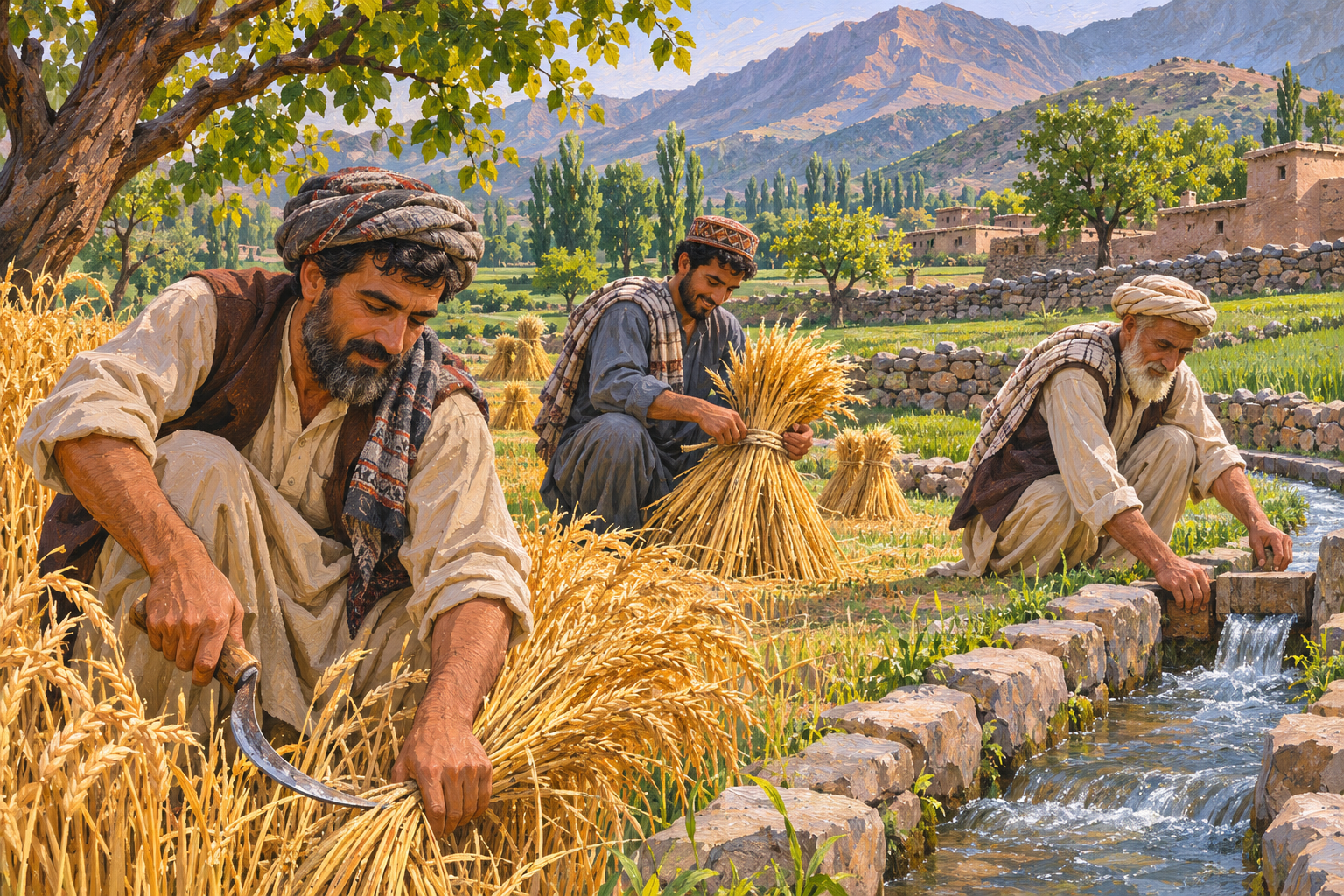
01 / THE FIELDS
Working the land
From cutting wheat to tying sheaves and tending an irrigation channel, the scene follows the small jobs that make up a harvest. The farmers share the field, each with a different task.
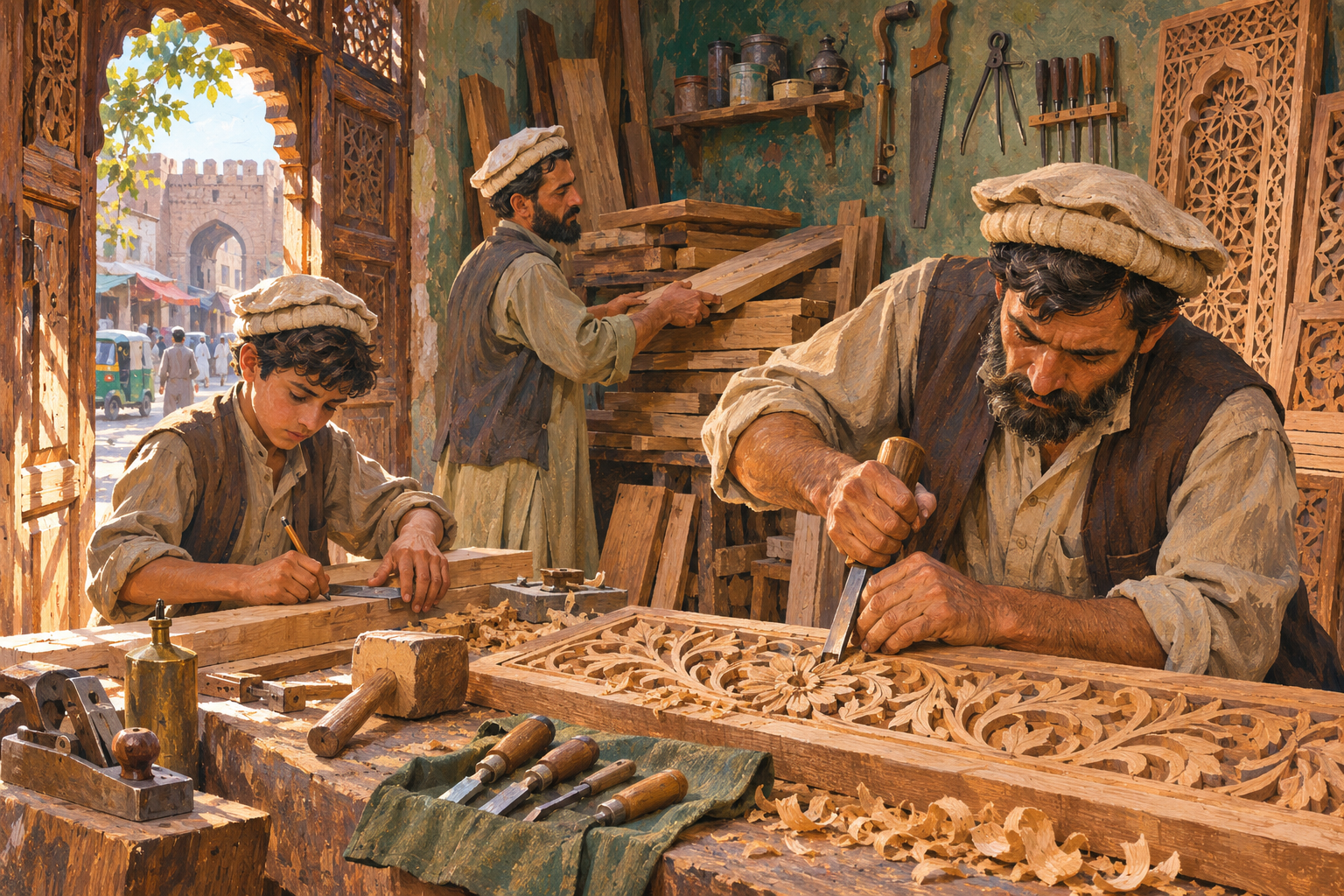
02 / THE WORKSHOP
Work done by hand
A carpenter shapes a carved panel while others prepare timber and work at the bench. The carved doors and balconies elsewhere in the archive begin with the patient work of people like these.
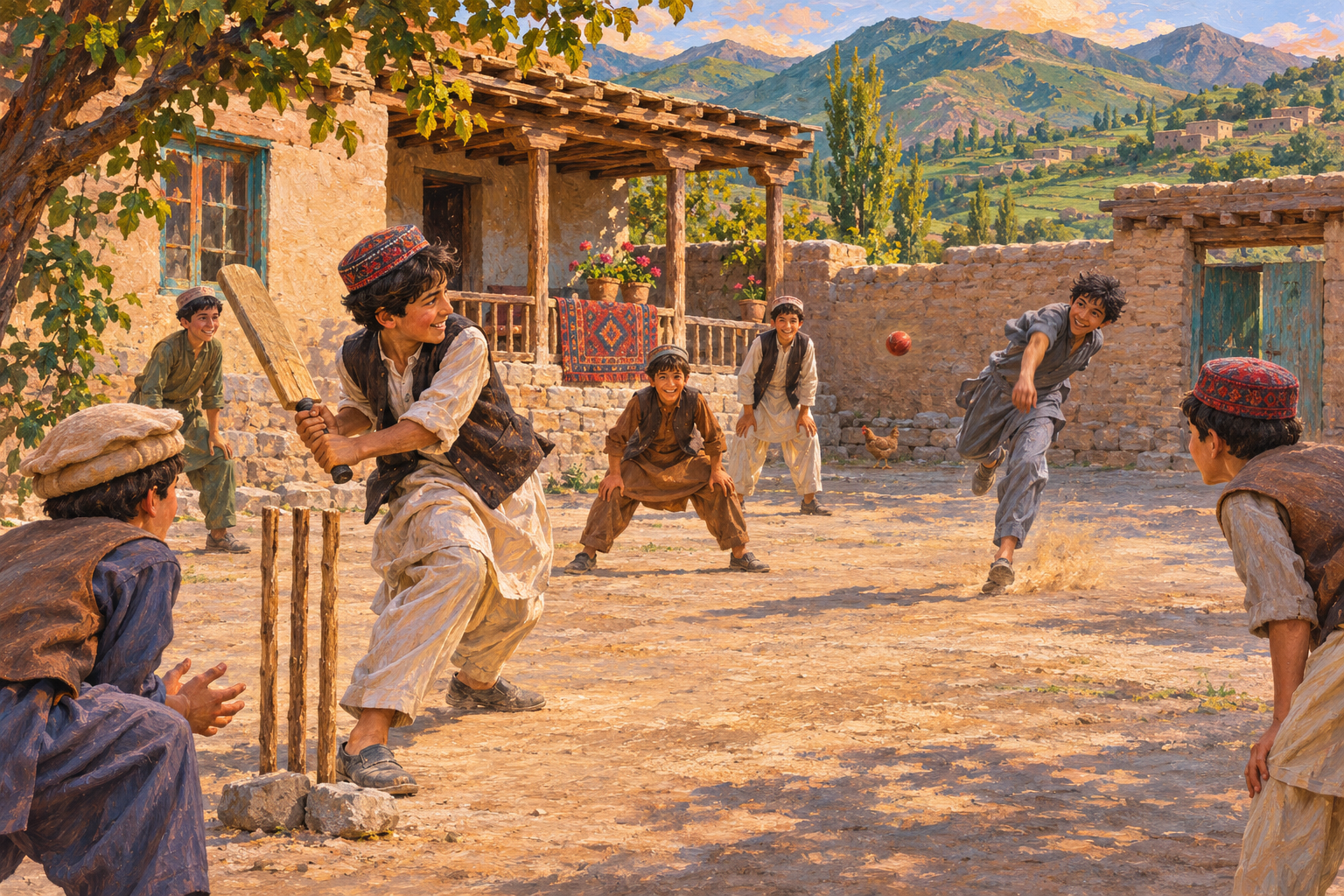
03 / THE COURTYARD
Making time to play
A courtyard becomes a cricket ground after the day’s work. A batter, bowler and friends make a game with a little space and the equipment they have.
01 / THE HUJRA, THE RUBAB & THE TAPPAY
Music in everyday life
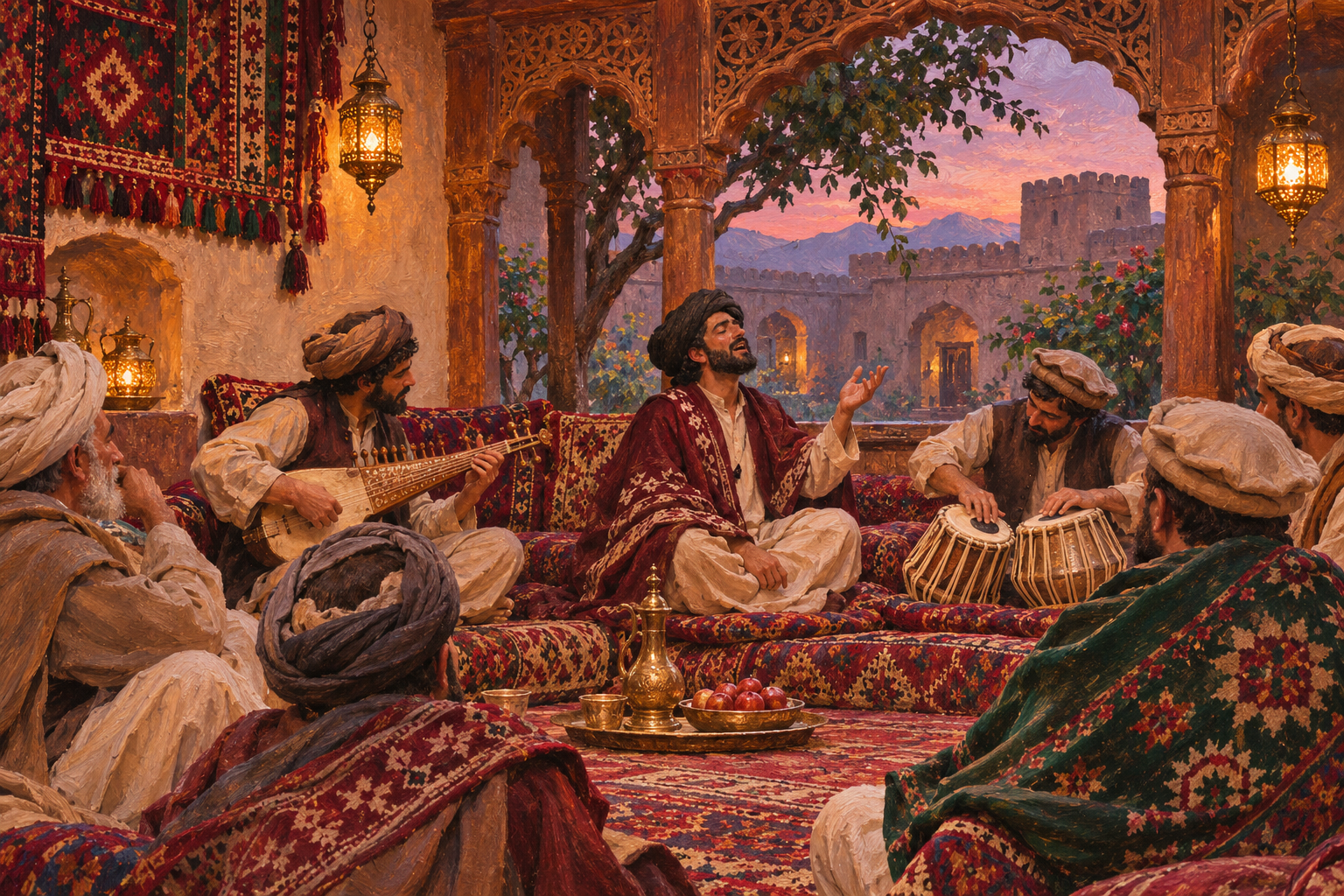
The hujra is a communal gathering space. The International Islamic University Islamabad’s folk-literature project describes the rubab and tabla as part of its musical life. Tappay are short, two-line folk poems that singers can weave together in performance. IIUI folk literature project ↗
The rubab’s carved wooden body and plucked strings are part of a wider regional tradition. UNESCO inscribed its making and playing in 2024 under a joint nomination by Afghanistan, Iran, Tajikistan and Uzbekistan. UNESCO inscription ↗
Explore the Pashto music guide ↗

02 / MODERN PASHTO POETRY
Ghani Khan
Abdul Ghani Khan was a Pashto poet and artist whose work asks philosophical questions about beauty, faith and human life. At a 2019 tribute, singers performed his verses and Fayyaz Kheshgi explained how the thought in each poem guides the melody. Dawn’s tribute coverage ↗
The University of Peshawar also hosted a poetry session in his memory. Sardar Ali Takkar’s renditions offer another way to encounter his kalaam. University tribute coverage ↗
 Play Ghani Khan’s kalaam
Ghani Khan’s kalaam
An archival YouTube upload of Sardar Ali Takkar singing Ghani Khan’s poetry.
Watch on YouTube ↗03 / SUFI VERSE
Rahman Baba
Abdul Rahman Mohmand, remembered as Rahman Baba, is a central voice in classical Pashto Sufi poetry. His verse returns to love, humility and spiritual self-examination. The collected poems are known as his Diwan. Encyclopædia Afghanica ↗
Karan Khan set Rahman Baba’s kalaam to qawwali. His recordings of Sta Pa Ishq Ke and Jwandon let listeners hear how a contemporary ensemble treats the classical verse. Karan Khan’s qawwali project ↗
Read the Karan Khan chapter ↗
