
FORMS TO LISTEN FOR
Tappa, ghazal and Sufi verse
A tappa, also known as a landay, is a short two-line folk poem, traditionally described as nine syllables followed by thirteen. Singers can string several together in one performance. Love, separation and social life can fit into those two lines. IIUI folk literature project ↗
Ghazals unfold through a series of couplets. In performance, a repeated melodic line can let each couplet land on its own. Compare Bacha’s Stergey Ghazal with Yamee’s Tappay to hear the difference in how the verse is delivered. Hear Stergey Ghazal ↗
Sufi verse is another strand. Karan Khan’s settings of Rahman Baba give listeners one route from classical Pashto poetry into contemporary performance. Read about Karan’s Sufi repertoire ↗
INSTRUMENTS & SETTINGS
The rubab, the hujra and the stage
The rubab is a plucked lute whose making combines woodworking, carving and inlay. In 2024 UNESCO inscribed rubab craftsmanship and performance through a multinational nomination by Afghanistan, Iran, Tajikistan and Uzbekistan. UNESCO inscription ↗
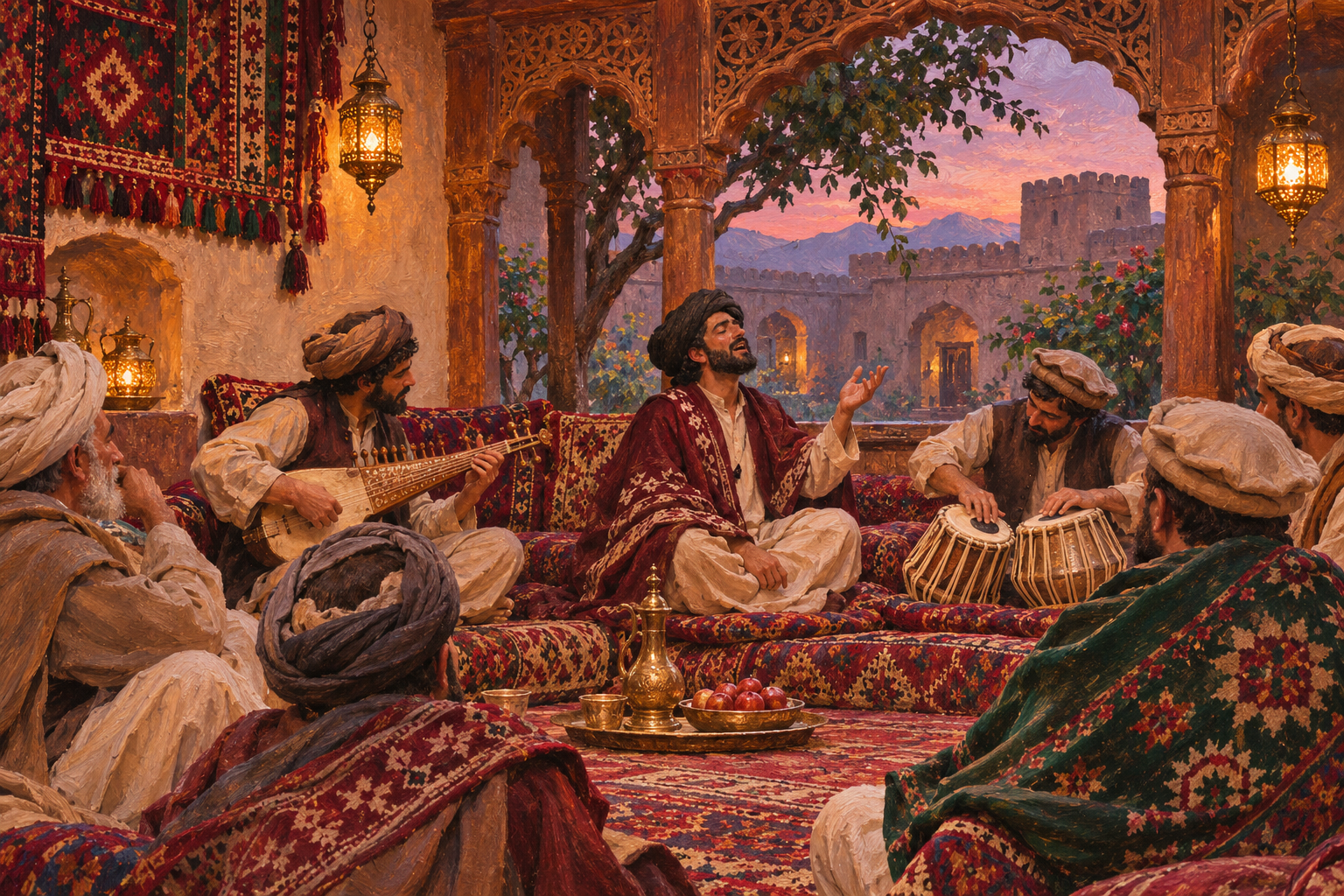
IIUI’s folk-literature project describes rubab and tabla in Pashtun hujras, communal spaces where music can be shared face to face. Contemporary arrangements bring that sound into different settings, from wedding and concert performances to recorded releases. IIUI folk literature project ↗
LISTEN & WATCH
Selected recordings
Tappay
Hear Yamee Khan’s studio recording of the form. Official video ↗
 Watch Stergey Ghazal on YouTube
Stergey Ghazal
Listen to how Haroon Bacha delivers the couplets. Official video ↗