LIVING CULTURE
Life beyond the timeline
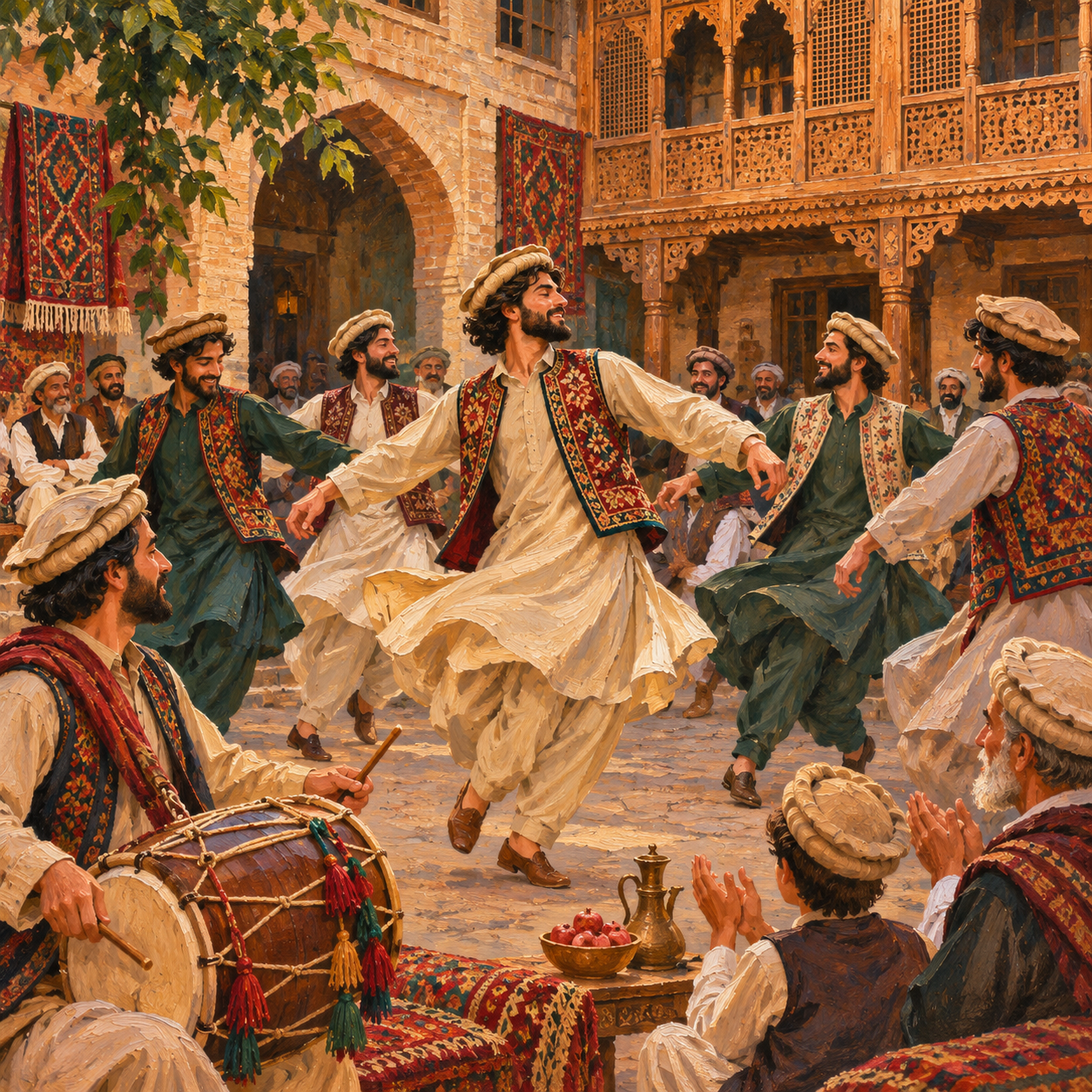
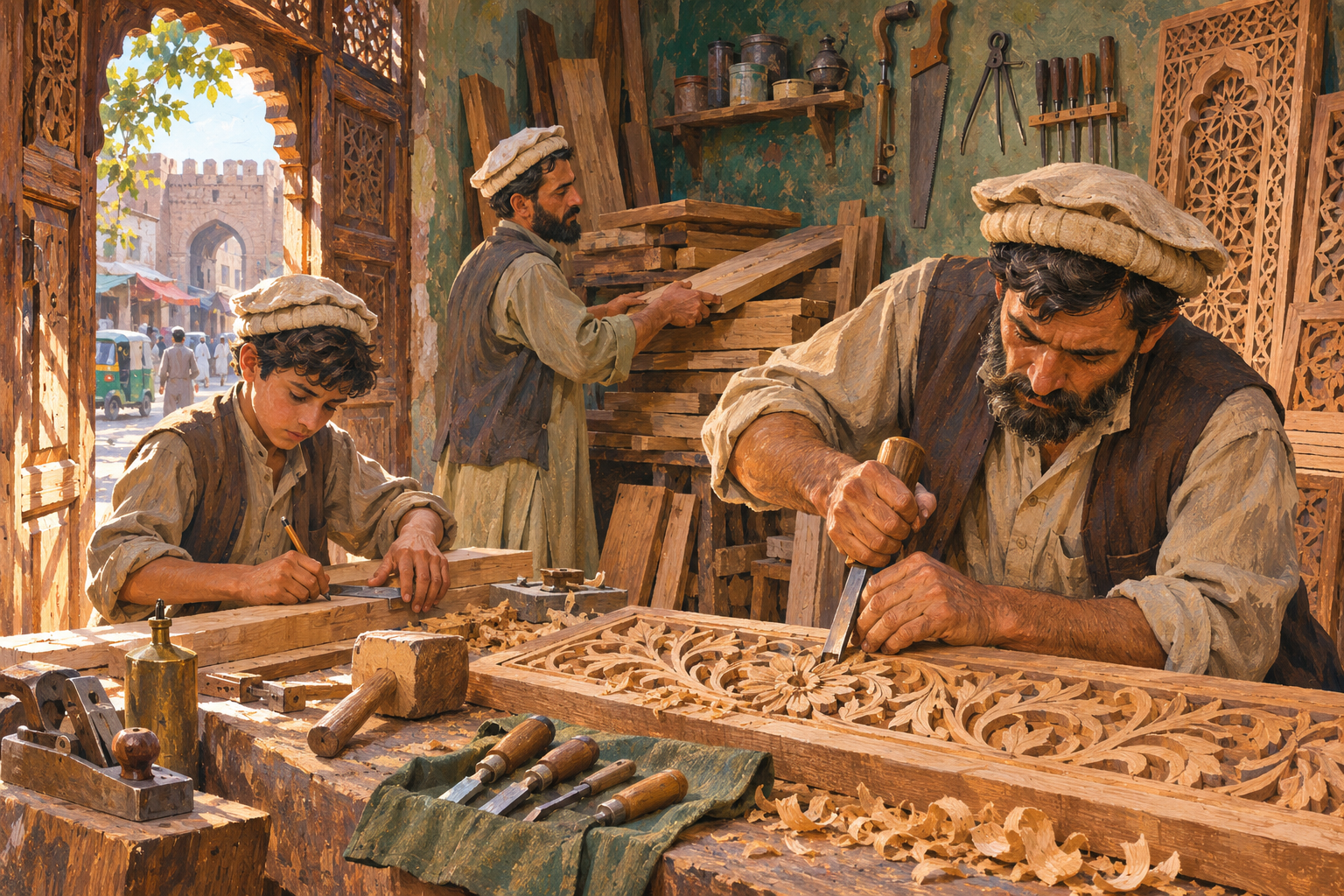
Fields, workshops and courtyards offer another view of Pashtun heritage through the people who work, make things and play there.
Explore everyday Pashtun life ↗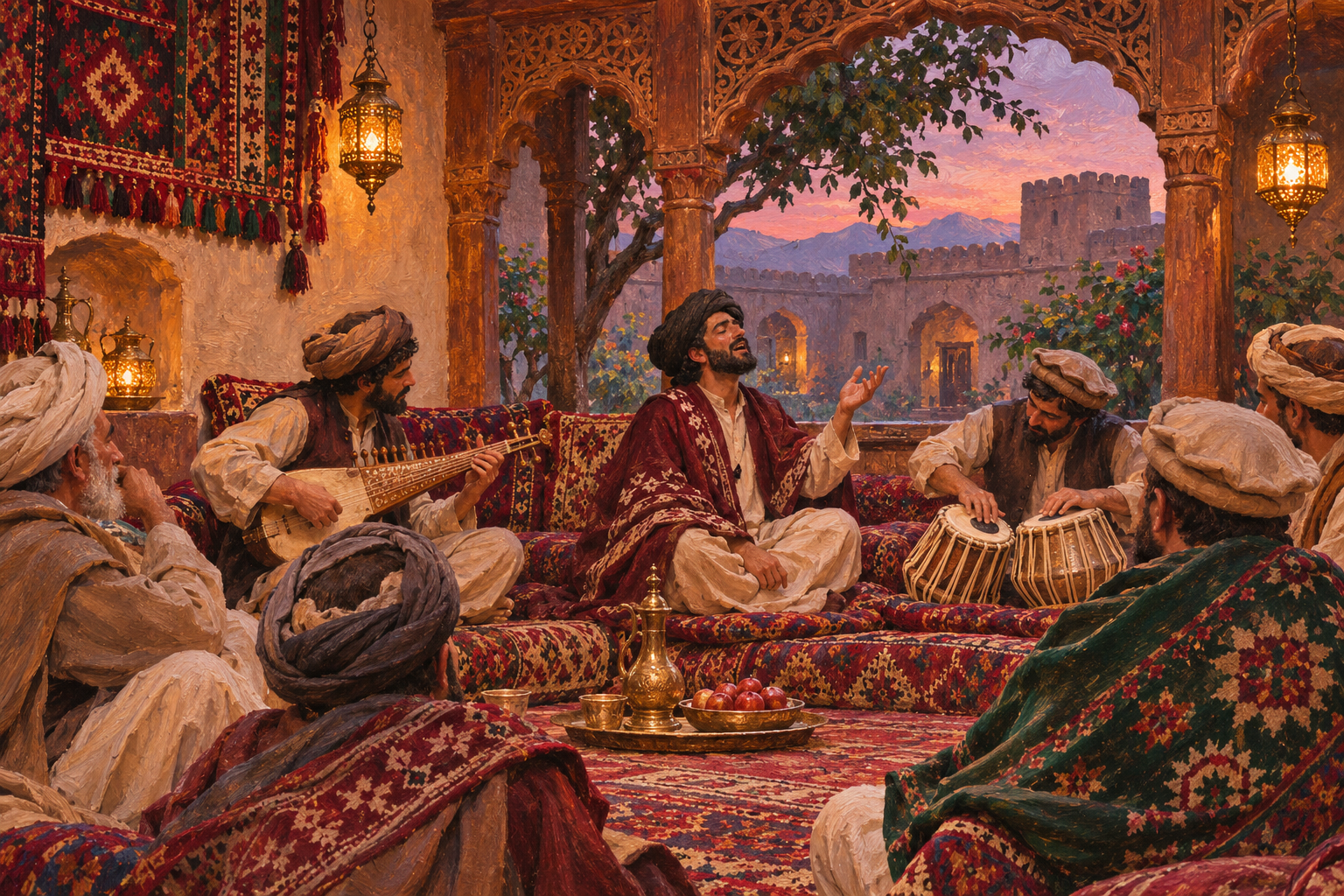
A SHARED LANGUAGE
Across regions and generations
Pashto belongs to the Iranian language family. It is spoken across communities in Afghanistan and Pakistan, and regional pronunciations help account for forms such as Pashto and Pakhto, or Pashtun and Pukhtun. Encyclopædia Afghanica ↗
Written poetry and oral verse have both carried the language. The hujra is one setting for communal music and storytelling. Short forms such as tappa can travel from a gathering to a record without losing their familiarity. IIUI folk literature project ↗
SELECTED MOMENTS
Poets, borders and musical memory
- 17TH CENTURY
Khushal Khan Khattak and Rahman Baba
Khushal was a poet and Khattak chief whose writing engaged with political life. Rahman Baba’s devotional verse became another enduring part of Pashto literary culture. UNESCO literary history ↗
- 1747
The Durrani state
Ahmad Shah Durrani’s rise marks the formation of a new Afghan state centred on a Pashtun confederacy. Historical context ↗
- 1893
The Durand Line
An agreement between British India and Afghanistan drew a frontier through areas inhabited by Pashtun communities. Historical analysis ↗
- 21ST CENTURY
Performing across borders
Ethnomusicologist John Baily discusses the circulation of Afghan musicians through Peshawar and explains the place of the rubab and tappa in Pashtun music. John Baily interview ↗